
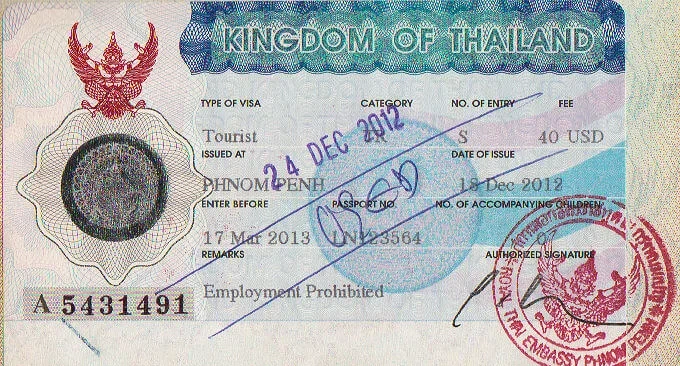
Which visas can be extended
Not all Thai visas are extendable. Long-stay visas that permit temporary residence can be extended, but short-stay tourist visas cannot. The distinction is important: extendable visas are designed for stays that may require additional time in Thailand, while tourist visas are explicitly for temporary visits with set durations.
Visas that can be extended include:
- Retirement Visa (O-A): Extended for one year, requires proof of income or savings
- DTV (Digital Nomad Visa): Extended for one year, requires proof of remote income and accommodation
- ED Visa (Education): Extended for one year or to match school calendar, requires school letter confirming enrollment
- Elite Visa: Extended according to membership tier, requires Elite membership proof
- Non-O Visa (Work/Business/Dependent): Extended for one year, requires category-specific documentation
- Non-B Visa (Work): Extended for one year, requires employment documentation
Visas that cannot be extended include tourist visas and visa-exempt entry. If your tourist visa is expiring and you wish to remain in Thailand, you must either exit and re-enter on a new visa, apply for a different visa type, or border run to restart your tourist visa allocation.
Extension eligibility and requirements by visa type
Retirement Visa (O-A) extension
Retirement visa extensions require proof of financial stability. You must demonstrate either a monthly income of 65,000 THB or a bank account balance of 800,000 THB (single), or a combined household income of 100,000 THB with 400,000 THB savings (married). These amounts have been consistent since 2023 and are verified through bank statements and income documentation.
Original passport, TM.47 notification (or recent 90-day report), bank statement (last 2 months), income letter from employer or official income documentation, TM.30 address registration confirmation.
DTV extension
DTV extensions require proof of foreign-source remote income and a valid accommodation address in Thailand. Most applicants provide bank statements showing minimum monthly deposits of approximately 30,000 THB (actual threshold varies by immigration office). Accommodation proof can be a lease agreement, utility bill, or property registration.
ED Visa extension
ED visa extensions require a letter from your education institution confirming continued enrollment or confirmation that you will resume enrollment in the next academic term. Some schools can provide extension letters that cover the upcoming term even if the current term has ended.
Non-O and Non-B work visas
Work visa extensions require an employment letter from your Thai employer confirming your position, salary, and employment duration. The letter must be on company letterhead and signed by an authorized officer. Your employer may need to register with immigration's employment tracking system.
Critical timing: Always apply for extension at least 30 days before expiry. Immigration offices process extensions sequentially, and applications submitted too close to expiry may not be processed in time. If your visa expires while your extension is pending, you are technically overstaying, which incurs penalties.
Step-by-step extension process
Step 1: Gather documents
Collect all required documents specific to your visa type. Create photocopies of your passport (bio page, current visa page, and entry/exit stamps). Ensure all documents are in order and any translations are notarized if required. For financial documents, ensure statements are recent (within 1 to 2 months of application).
Step 2: Obtain TM.47 form
Collect the TM.47 form from the immigration office or print it from the official website. The form is available in both English and Thai. Complete it accurately, ensuring your passport number and current visa information match exactly. Have a pen ready to complete the form at immigration if you are unsure.
Step 3: Visit immigration office
Arrive at your local immigration office during business hours (typically Monday to Friday, 8:30 AM to 4:30 PM). For Chiang Mai, visit the main office at 71 Moo 3, Airport Road, Suthep Sub-district, Muang District, Chiang Mai 50200. You can also apply at the Central Festival secondary office for tourist visa extensions (verify availability first). Bring your original passport, completed TM.47 form, all supporting documents, and photocopies.
Step 4: Submit and receive token
Submit your documents to the immigration officer. If all documents are in order, you will receive a token with a processing number and timeline. Most extensions are processed same-day (1 to 3 hours) for standard cases. Some complex cases or nationality-specific approvals may require 1 to 2 additional days.
Step 5: Pay fee and collect approved extension
Once processing is complete, return with your token. An officer will confirm your extension has been approved, collect the 1,900 THB fee, and stamp your new extension into your passport. Your new visa expiry date will be clearly marked.
Extension fees and timelines
| Visa Type | Extension Period | Fee | Processing Time |
|---|---|---|---|
| Retirement (O-A) | 1 year | 1,900 THB | 1-3 hours same-day |
| DTV | 1 year | 1,900 THB | 1-3 hours same-day |
| ED Visa | 1 year (varies by school) | 1,900 THB | 1-3 hours same-day |
| Elite | Per membership | 1,900 THB | 1-3 hours same-day |
| Non-O Work | 1 year | 1,900 THB | 1-3 hours same-day |
| Non-B Work | 1 year | 1,900 THB | 1-3 hours same-day |

Extension vs renewal: what is the difference
An extension continues your current visa status for an additional period. A renewal replaces your visa with a new one. Both allow you to stay in Thailand longer, but they differ in process and requirements.
Extensions are simpler: you submit a TM.47 extension form and category-specific supporting documents. Processing is faster (1 to 3 hours) and requirements are lighter. Extensions preserve your original visa grant date and entry status.
Renewals require a complete new application as if you are applying for the visa from scratch. You must submit the full original documentation set (financial statements, employment letters, medical exams if required, etc.). Renewals take longer to process (several days to weeks) and may require an interview. Renewals are used when you want to change visa categories or when your extension eligibility has lapsed.
For most residents, extension is the routine process. Renewal is necessary only if your circumstances change or you need to shift to a different visa type. Always clarify with immigration whether your situation requires an extension or a renewal before submitting documents.
Common extension denial reasons
Extensions are denied most frequently for incomplete documentation. Missing bank statements, employment letters without proper authorization, or photocopies that are unclear can trigger rejection. If your application is rejected, immigration will advise which documents are missing. Correct and resubmit within a few days.
Financial threshold failures are also common. If your bank balance or monthly income does not meet the required minimum for your visa type, your extension will be denied. You have a grace period to gather additional funds and reapply.
Applications submitted too close to visa expiry may be rejected or marked as pending overstay if the processing extends past your expiry. Always apply at least 30 days in advance to avoid this.