Everyday transport options
The choice that most long-stay residents reach relatively quickly is whether to rent a scooter. Everything else . Grab, songthaews, tuk-tuks . still applies, but having your own transport changes the radius of your daily life significantly. This section covers each option honestly, including what works and what its limits are.
Walking
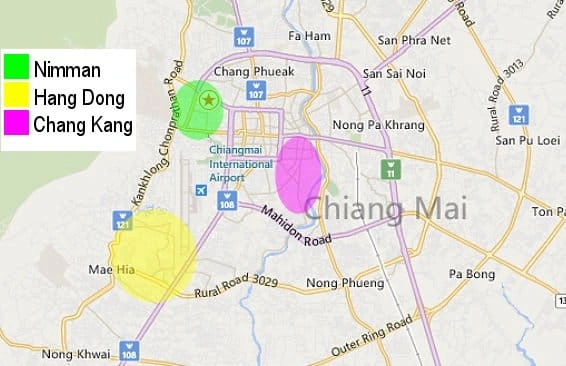
The Old City is walkable. Within the moat, most major temples, cafes, restaurants and convenience stores are within a 10 to 15 minute walk of each other. Nimman is walkable within its core blocks, particularly around Nimmanhaemin Road and the sois branching east and west from it. Maya Mall, CAMP, and the main coffee strip are all on foot from most Nimman accommodation.
Outside these two zones, walking becomes less practical. There are few pavements on arterial roads, traffic is fast, and distances between destinations stretch quickly once you are outside the inner city. The heat from March to June makes extended outdoor walking uncomfortable between around 10am and 5pm.
Bicycle rental is available throughout the Old City and Nimman for 80 to 150 THB per day. Long-stay residents sometimes buy a secondhand bicycle for 2,000 to 4,000 THB. The Sunday Walking Street (Wualai Road) and Saturday market area are both easier to access by bicycle than by scooter on market evenings due to congestion. The Ping River road and Mae Rim valley routes are popular for recreational morning rides. The main limitation is heat, traffic on major roads, and the absence of secure parking at many destinations.
Scooter and motorbike rental
The scooter is the default transport for most Chiang Mai long-stay residents. It opens up the whole city and province, eliminates dependence on apps or fixed routes, and keeps monthly transport costs predictable. Most 110cc to 125cc automatic scooters can be rented for 2,500 to 3,500 THB per month from local rental shops. Semi-automatic and larger bikes run 4,000 to 8,000 THB per month.
For stays of six months or longer, purchasing a secondhand scooter is often more economical. A reliable secondhand Honda PCX or Yamaha NMAX runs 35,000 to 55,000 THB and can be resold for a similar price on departure if maintained well. Local Facebook groups and the ChiangMaiAmbassador community board are practical places to find secondhand vehicles from departing residents.
Fuel costs are low. A full tank on a 125cc scooter costs around 100 to 130 THB and covers 150 to 200 km of mixed city and road use. Monthly fuel costs for typical city use run 250 to 400 THB.
Covers the full city and province. Parking is easy and usually free. Fastest option for navigating Chiang Mai traffic during peak hours when Grab wait times stretch. Requires confidence in Thai urban traffic conditions. Riders without experience on Asian road networks typically need a short adjustment period. Helmet use is mandatory and police enforcement is regular, particularly at checkpoints on major routes leaving the Old City.
Grab ride-hailing
Grab is the dominant ride-hailing app in Chiang Mai and operates reliably across the city. Booking is done through the app, fares are fixed and shown upfront, and payment can be made by cash or credit card linked to the app. Response times in central areas are usually two to eight minutes. In outer areas or during rain, waits can extend to 15 to 20 minutes.
Typical Grab car fares within the central city: 50 to 100 THB for short hops, 120 to 200 THB for cross-city trips, 250 to 400 THB for airport to Nimman or Old City. Grab bike (motorcycle taxi via the app) runs roughly 40 to 70 percent of the car fare for the same journey and arrives faster in traffic.
For residents who do not rent a scooter, a Grab-heavy lifestyle is manageable in budget terms if trips are kept to a few per day. Five or six Grab trips per day in a city this size can add up to 6,000 to 10,000 THB per month, which makes scooter rental economical by comparison for frequent movers.
No vehicle required, no parking to find, fixed fares with no negotiation. Ideal for airport transfers, late-night returns, rainy day use, and any trip where you would rather not ride in the heat. The main limitation is wait time during peak hours and rain. Not cost-effective as a sole transport method for residents who move frequently during the day.
Songthaews
Songthaews are the red pickup truck taxis that operate as shared transport on loose route patterns around the city. They are the cheapest way to move around: a standard ride anywhere within the central city costs 20 to 30 THB per person. You flag them down, tell the driver your direction, and they fit you in with other passengers heading the same way.
The system works but takes getting used to. There is no app, no fixed schedule, and the route can vary. Songthaews can also be chartered as a private vehicle for a negotiated price, typically 100 to 200 THB for a city trip depending on distance and bargaining. For residents comfortable with the system, songthaews work well for routine trips along familiar routes, particularly for the Central Airport Plaza run or the Nimman to Night Bazaar corridor.
Genuinely cheap and part of daily life for many residents. Requires knowing roughly where you are going and which direction the truck is heading. Not suitable for early-morning or late-night travel when frequency drops. A good fallback for budget-conscious residents between songthaew routes.
How neighbourhood shapes your transport choices
Where you live in Chiang Mai determines the transport infrastructure around you more than any other factor. This is worth understanding before committing to an area and a transport approach.
Old City residents live in the most walkable and cycle-friendly zone. Coffee shops, restaurants, supermarkets and markets are within walking distance. Songthaews run frequently along the moat roads. The trade-off is that the Old City becomes congested on weekend evenings around the markets, and scooter parking near popular spots can be difficult.
Nimman residents have a similarly walkable core. The difference is that Nimman skews toward the expat and digital nomad community, with co-working spaces, gyms and cafes within a tight radius. Grab is heavily used here. Residents who want to reach the Old City, markets, or the Ping River area regularly tend to use either a scooter or Grab.
Santitham and Chang Phueak sit north of the Old City. Scooter ownership is more common here because the area is less dense for casual walking and songthaew availability is patchier. Residents in these areas who do not have a scooter rely more heavily on Grab.
Out-of-town residents in areas like Mae Rim, Hang Dong or Saraphi typically own a scooter or car. These areas are pleasant, affordable, and quieter, but without personal transport they are functionally isolated. Grab operates in these areas but wait times are longer and costs per trip are higher.
Monthly transport costs for long-stay residents
| Transport approach | Estimated monthly cost (THB) |
|---|---|
| Scooter rental + fuel (central area resident) | 2,800 to 3,900 |
| Scooter rental + fuel + occasional Grab | 3,500 to 5,000 |
| Grab-only (moderate use) | 4,000 to 7,000 |
| Grab-only (frequent use) | 7,000 to 12,000 |
| Car running costs (fuel, parking, maintenance) | 5,000 to 10,000 |
| Bicycle + Grab for longer trips | 1,500 to 3,500 |
| Typical long-stay resident (scooter + some Grab) | 3,500 to 5,000 |
Day trips and road trips from Chiang Mai
One of the advantages that long-stay residents cite consistently is access to the surrounding province and region. Chiang Mai sits in a wide mountain valley with forested hills in every direction. Many of the best destinations are reachable in under two hours by scooter or car.
Doi Suthep temple is a 30-minute ride up a well-maintained mountain road from Nimman. The Monk's Trail and Huay Tung Tao reservoir are within 20 minutes. Mae Sa Waterfall and the Samoeng loop make a full day ride through highland scenery. Sticky Waterfalls (Nam Tok Bua Tong) in Mae Taeng district is about 70 km north and a straightforward 90-minute scooter ride. Doi Inthanon, Thailand's highest peak, is 90 minutes south by road.
Weekend trips work well from Chiang Mai. Pai is a four-hour drive or bus ride northwest and extremely popular with the long-stay community. Chiang Rai is three hours northeast and worth a full weekend. Lampang, 100 km south, is quieter and undervisited. Mae Hong Son requires a long mountain road or a short domestic flight.
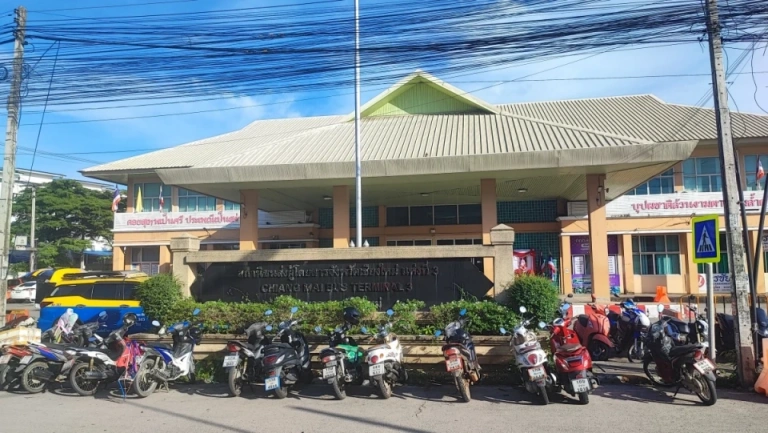
For residents without their own transport, songthaew minivans from the Arcade Bus Terminal cover most regional destinations. Organised day trips and van shares are available through guesthouses and the ChiangMaiAmbassador community for destinations like Doi Inthanon.
Driving to Pai: The road from Chiang Mai to Pai involves 762 curves over Mae Hong Son mountain passes. It is scenic but demands full attention. Scooter riders should have genuine confidence before attempting it. Car hire and shared minivan are the safer choices for less experienced riders.
Safety, rules and practical realities
Helmets are legally required for scooter riders and passengers. Police run regular checkpoints on main roads leading out of the Old City, on the Superhighway, and at entry points to popular destinations. Fines run 200 to 500 THB for no helmet and are issued routinely. Most rental shops provide helmets with the scooter.
Alcohol checkpoints operate at night, particularly on weekends and during Thai holidays. These are systematic and cannot be avoided by turning around once spotted. Thai drink-drive limits are 50mg/100ml, lower than some Western jurisdictions.
On international driving licences: an international driving permit (IDP) based on your home country licence is the appropriate document for driving legally in Thailand. Technically, a category A motorcycle licence is required to ride above 50cc. In practice, short-stay tourists ride on tourist visa with minimal scrutiny. For long-stay residents, the practical risk profile increases over time. A Thai driving licence is obtainable at the Chiang Mai Land Transport Office and is worth considering for stays beyond six months.
Rainy season (May to October) brings afternoon downpours. Roads flood in low-lying areas around the Ping River and parts of Chang Phueak. Scooter riders get wet and visibility drops sharply in heavy rain. Having a rain jacket accessible is standard practice. Air quality during burning season (roughly February to April) can deteriorate significantly, with PM2.5 readings pushing into hazardous ranges on bad days. Riding with a mask on poor air quality days is common among residents.