
Overview
Thailand offers multiple entry ports: international airports, land borders, and seaports. Air entry and land border crossing have different procedures, timelines, document requirements, and scrutiny levels. Understanding these differences helps you plan your arrival and avoid delays.
Air Entry to Thailand
How It Works
When arriving by international flight, you enter through a formal airport immigration facility with structured queues and defined procedures.
Process: Step by Step
- Complete TDAC before arrival at tdac.immigration.go.th. Provide arrival flight number, date, airline.
- Disembark and proceed to immigration hall.
- Join the queue in the relevant lane (visitor, visa holder, Thai citizen).
- Present documents at the counter: passport, visa, onward ticket, TDAC reference number.
- Answer questions about your stay: length, purpose, accommodation, funds.
- Get stamped and proceed to baggage claim.
Processing Time
Typical air entry takes 15–30 minutes per person, depending on queue length and officer efficiency. Peak times are early morning (06:00–08:00) and evening (18:00–21:00). Arriving mid-morning or mid-afternoon reduces waits significantly.
Required Documents
- Passport (valid for at least 6 months)
- Visa (if required by your nationality)
- Return or onward flight ticket (printed or on phone)
- TDAC reference number (from online submission)
- Accommodation address (hotel name or hostel)
- Proof of funds (cash, card, or bank statement on phone)
Officer Scrutiny
Officers at major airports (Suvarnabhumi, Don Muang, Phuket) process thousands of arrivals daily. Scrutiny is moderate. They check:
- Document validity
- Visa appropriateness for stated purpose
- No previous overstays
- Reasonable onward travel plans
If you present yourself neatly and answer questions directly, passage is routine.
Chiang Mai Airport (CNX)
Chiang Mai International Airport has dedicated tourist and visa holder lanes. Processing is efficient. Queue times are typically shorter than Bangkok airports (10–20 minutes). Officers are professional and experienced with tourist arrivals.
Land Border Entry to Thailand
How It Works
Land borders are typically lower-infrastructure crossing points where you queue at an immigration booth. Procedures are less standardized than airports.
Major Northern Borders (Chiang Rai Province)
Mae Sai Border Checkpoint
The main Thailand-Myanmar crossing 5 km from Chiang Rai City. Processes both tourist visa-exempt and visa arrivals. Peak hours are weekday mornings and all day Saturday-Sunday.
- Queue time: 30 minutes–2 hours depending on day and time
- Officer scrutiny: High. Officers examine passports closely for overstay history.
- Document requirements: Originals only; copies not accepted. Visas must be pristine.
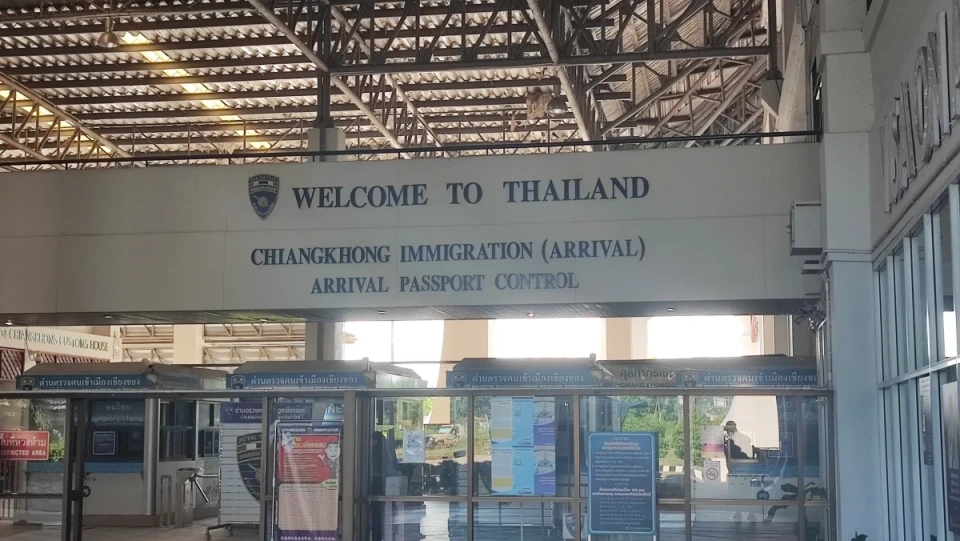
Chiang Khong Border (Laos Entry)
The Thailand-Laos crossing near Chiang Rai, typically used for border runs or Laos transit. More basic infrastructure than Mae Sai.
- Queue time: 20 minutes–1 hour. Less busy than Mae Sai but more unpredictable.
- Officer scrutiny: Very high. Officers are strict about document completeness.
- Common issues: Visa errors, missing TM.8 stamps, unclear onward plans.
Land Border Process: Step by Step
- Complete TDAC before arrival, as for air entry.
- Approach the checkpoint with vehicle (motorbike, car, minibus) or on foot.
- Join the queue at the immigration booth (no lane distinction; single queue).
- Present all documents to the officer: passport, visa, onward ticket, TDAC reference.
- Answer questions about your travel history, purpose, and accommodation.
- Possible additional checks: Officer may request bank statements, proof of funds, or previous visa stamps.
- Get stamped and proceed through.
Processing Time
Land borders typically take longer than airports. Expect 30 minutes to 2 hours, depending on:
- Day of week (weekends are busiest)
- Time of day (early morning less busy; afternoon peaks)
- Your documents (clear paperwork = faster processing)
- Officer mood and workload
Required Documents
- Passport (valid for at least 6 months)
- Visa (if required; originals required. no copies)
- Return or onward ticket (paper copies recommended)
- TDAC reference number
- Bank statement or proof of funds (may be requested)
- Accommodation details (written down, not just verbal)
Land borders are stricter about documentation. Always carry originals. Officer may request bank statements or visa originals if suspicious about purpose.
Officer Scrutiny
Land border officers are significantly stricter than airport officers. They have more discretion and are trained to detect fraudulent visas or hidden overstays.
Common flags:
- Frequent entries within short periods (suggests visa runs)
- Mismatched visa type and stated purpose (tourist visa claiming to study)
- Unclear accommodation or employment plans
- No proof of funds
- Previous overstays or entry bans
If an officer is suspicious, they may deny entry or require you to return the way you came.
Quick Comparison Table
| Factor | Air Entry | Land Border |
|---|---|---|
| Processing Time | 15–30 min (typical) | 30 min–2 hours |
| Officer Scrutiny | Moderate | High |
| Document Originals Required | Photocopies acceptable | Originals only |
| Proof of Funds | Usually not checked | Often requested |
| Peak Times | Early morning, evening | Weekends, afternoons |
| Denial Risk | Low | Moderate (if suspicious) |
| TDAC Required | Yes | Yes |

Chiang Mai-Specific Borders
If entering via Chiang Rai Province borders (Mae Sai, Chiang Khong), note that these are the most commonly used northern crossing points. Officers process dozens of foreigner arrivals daily and are experienced but strict.
Recommendations:
- Arrive on weekday mornings (Monday–Friday, 08:00–12:00) for shortest queues
- Have all documents ready before reaching the booth
- Be prepared to explain your stay in Thailand clearly
- Dress neatly and speak respectfully
- Avoid mentioning work, business, or anything suggesting employment
Related Visa Categories
- Visa-Exempt Entry – Valid for air and land entry; processed quickly at both.
- ED Visa – Long-term study option; clearer entry path. Reduces scrutiny.
- Non-O Long-Stay Visa – For 12+ month stays. Simplifies future land border entries.
- Queue Strategy Guide – Timing tips for both air and land entry.
For frequent entries via land borders, an ED visa or Non-O visa signals legitimate intent and reduces officer questioning.